Buy pccj.eu ?
We are moving the project
pccj.eu .
Are you interested in purchasing the domain
pccj.eu ?
domain@kv-gmbh.de · 0541-91531010
Buy pccj.eu ?
How are the nerve cells structured in invertebrates?
In invertebrates, nerve cells are organized into a network called a nerve net. This nerve net consists of interconnected neurons that are spread throughout the body. These neurons are typically simpler in structure compared to the more specialized nerve cells found in vertebrates. The nerve net allows for rapid communication and coordination of responses to stimuli in invertebrates. **
Into which seven groups can invertebrates be divided?
Invertebrates can be divided into seven groups: Porifera (sponges), Cnidaria (jellyfish, corals), Platyhelminthes (flatworms), Nematoda (roundworms), Annelida (segmented worms), Mollusca (snails, clams, octopuses), and Arthropoda (insects, spiders, crustaceans). Each group has its own unique characteristics and includes a wide variety of species with diverse adaptations for survival. **


Similar search terms for Invertebrates
Top-Angebote
Products related to Invertebrates:
-
eufy Security eufyCam 2 Pro 2K Wireless Security Camera System - 2 Cameras + HomeBase 2The eufyCam 2 Pro 2-Cam Kit is a wire-free home security camera system from eufy Security. It pairs two battery-powered eufyCam 2 Pro cameras, which record in 2K resolution, with HomeBase 2, the hub that connects the cameras to your home Wi-Fi and stores footage locally.2 x eufyCam 2 Pro 2K wireless cameras1 x HomeBase 2Rechargeable battery cameras for indoor or outdoor mountingLocal storage on HomeBase 2 — no monthly subscription neededViewed and controlled in the eufy Security app331,49 £*Shipping: 0,00 £Secure redirect to the provider
-
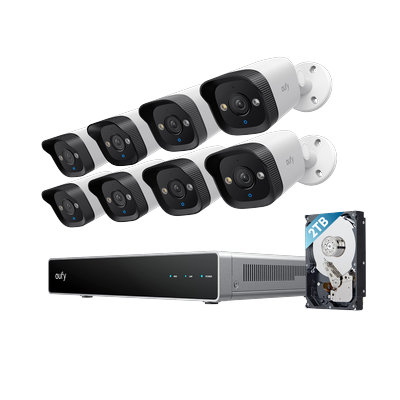
eufy PoE NVR Security System E40- 8× 4K Bullet Cameras4K UHD & 122° WIDE-ANGLE FOV: Experience stunning 4K Ultra HD resolution for incredibly sharp, lifelike video, while the wide 122° Field of View offers comprehensive coverage, perfect for capturing dynamic environments in exceptional detail...899,99 $*Shipping: 0,00 $Secure redirect to the provider
-
eufy PoE NVR Security System S4 Max + 2 Bullet CamerasThe Ultimate 4-Cam System: Safeguard every corner with two 4K bullet cameras for key areas, four bullet-PTZs for a wide 4K view, and one 2K PTZ for 8× zoom and seamless 360° coverage for intelligent, active monitoring. Powered by AI-ISP for vibrant...1199,99 $*Shipping: 0,00 $Secure redirect to the provider
-
eufy PoE NVR Security System S4 Max + 2 Turret CamerasThe Ultimate 4-Cam System: Safeguard every corner with two 4K turret cameras for key areas, four bullet-PTZs for a wide 4K view, and one 2K PTZ for 8× zoom and seamless 360° coverage for intelligent, active monitoring. Powered by AI-ISP for vibrant...1199,99 $*Shipping: 0,00 $Secure redirect to the provider



-
What is the difference between vertebrates and invertebrates?
The main difference between vertebrates and invertebrates is the presence of a backbone. Vertebrates have a backbone made of vertebrae that protects the spinal cord, while invertebrates do not have a backbone. Vertebrates include animals such as mammals, birds, reptiles, amphibians, and fish, while invertebrates include animals such as insects, spiders, worms, and mollusks. Additionally, vertebrates tend to have more complex body systems and are generally larger in size compared to invertebrates. **
-
What are the characteristics of vertebrates, invertebrates, and insects?
Vertebrates are animals with a backbone or spinal column, including mammals, birds, reptiles, amphibians, and fish. They typically have a well-developed internal skeleton and a complex nervous system. Invertebrates, on the other hand, are animals without a backbone, such as insects, arachnids, mollusks, and crustaceans. They often have exoskeletons for support and protection. Insects are a specific type of invertebrate characterized by having six legs, three body segments (head, thorax, and abdomen), and often wings. They are the most diverse group of animals on Earth, with over a million described species. **
-
Why are there mainly electrical synapses in fish and invertebrates?
Electrical synapses are more common in fish and invertebrates because they allow for faster and more direct communication between neurons. This is important in these organisms for rapid responses to environmental stimuli and for coordinating movements. Additionally, electrical synapses are more energy-efficient compared to chemical synapses, which is advantageous for organisms with simpler nervous systems. Overall, the prevalence of electrical synapses in fish and invertebrates reflects their need for efficient and rapid neural communication in their environments. **
-
Should surveillance cameras or fire alarms be installed in the restrooms of gas stations?
Surveillance cameras in restrooms of gas stations can be seen as an invasion of privacy and may make customers uncomfortable. However, fire alarms are essential for safety in case of emergencies. It is important to strike a balance between ensuring safety and respecting individuals' privacy. Therefore, fire alarms should be installed in restrooms for safety reasons, but surveillance cameras should not be installed unless there is a specific security concern that warrants their use. **


What is the difference between the axons of vertebrates and invertebrates?
The main difference between the axons of vertebrates and invertebrates lies in their myelination. In vertebrates, axons are often myelinated, which means they are surrounded by a fatty substance that speeds up the transmission of electrical signals. In contrast, invertebrate axons are typically unmyelinated, which can result in slower signal transmission. Additionally, vertebrate axons tend to be larger in diameter compared to invertebrate axons, allowing for faster conduction of nerve impulses. **
How does the conduction of excitation work in vertebrates and invertebrates?
In vertebrates, excitation is conducted through the nervous system, which consists of neurons that transmit electrical signals. When a stimulus is detected, such as touch or sound, sensory neurons transmit the signal to the central nervous system, where it is processed and a response is generated. This response is then transmitted through motor neurons to the appropriate muscles or glands. In invertebrates, excitation is also conducted through the nervous system, but their nervous system is less centralized than in vertebrates. Invertebrates have a network of neurons that transmit signals throughout the body, allowing for rapid responses to stimuli. Some invertebrates, such as insects, also have specialized sensory organs that detect specific stimuli and transmit signals to the nervous system for processing and response. **
Top-Angebote
Products related to Invertebrates:
-
Axis T98A18-VE Outdoor Surveillance Cabinet for PTZ Cameras, IP66 IK10 NEMA 4X, WhiteThe Axis T98A18-VE is an outdoor-ready surveillance cabinet for installing Axis PTZ cameras together with their power and network equipment. It is IP66, NEMA 4X and IK10 rated, operates from -40 to +75 degrees C and has a stainless steel mounting plate, DIN rail and pre-mounted cable gaskets. Polycarbonate and stainless steel construction in white; part 5900-181.379,49 £*Shipping: 0,00 £Secure redirect to the provider
-
eufy Network Video Recorder S4 for Home Security CamerasLocal AI Agent: Unlock proactive, real-time security with our local AI agent, fueled by 6T/8-Core power for instant analysis, genuine threat identification, and decisive action. Customize no-go zones and alerts, enabling AI to accurately detect real...599,99 $*Shipping: 0,00 $Secure redirect to the provider
-
eufy Security eufyCam 2 Pro 2K Wireless Security Camera System - 2 Cameras + HomeBase 2The eufyCam 2 Pro 2-Cam Kit is a wire-free home security camera system from eufy Security. It pairs two battery-powered eufyCam 2 Pro cameras, which record in 2K resolution, with HomeBase 2, the hub that connects the cameras to your home Wi-Fi and stores footage locally.2 x eufyCam 2 Pro 2K wireless cameras1 x HomeBase 2Rechargeable battery cameras for indoor or outdoor mountingLocal storage on HomeBase 2 — no monthly subscription neededViewed and controlled in the eufy Security app331,49 £*Shipping: 0,00 £Secure redirect to the provider
-
eufy PoE NVR Security System E40- 8× 4K Bullet Cameras4K UHD & 122° WIDE-ANGLE FOV: Experience stunning 4K Ultra HD resolution for incredibly sharp, lifelike video, while the wide 122° Field of View offers comprehensive coverage, perfect for capturing dynamic environments in exceptional detail...899,99 $*Shipping: 0,00 $Secure redirect to the provider
-
How are the nerve cells structured in invertebrates?
In invertebrates, nerve cells are organized into a network called a nerve net. This nerve net consists of interconnected neurons that are spread throughout the body. These neurons are typically simpler in structure compared to the more specialized nerve cells found in vertebrates. The nerve net allows for rapid communication and coordination of responses to stimuli in invertebrates. **
-
Into which seven groups can invertebrates be divided?
Invertebrates can be divided into seven groups: Porifera (sponges), Cnidaria (jellyfish, corals), Platyhelminthes (flatworms), Nematoda (roundworms), Annelida (segmented worms), Mollusca (snails, clams, octopuses), and Arthropoda (insects, spiders, crustaceans). Each group has its own unique characteristics and includes a wide variety of species with diverse adaptations for survival. **
-
What is the difference between vertebrates and invertebrates?
The main difference between vertebrates and invertebrates is the presence of a backbone. Vertebrates have a backbone made of vertebrae that protects the spinal cord, while invertebrates do not have a backbone. Vertebrates include animals such as mammals, birds, reptiles, amphibians, and fish, while invertebrates include animals such as insects, spiders, worms, and mollusks. Additionally, vertebrates tend to have more complex body systems and are generally larger in size compared to invertebrates. **
-
What are the characteristics of vertebrates, invertebrates, and insects?
Vertebrates are animals with a backbone or spinal column, including mammals, birds, reptiles, amphibians, and fish. They typically have a well-developed internal skeleton and a complex nervous system. Invertebrates, on the other hand, are animals without a backbone, such as insects, arachnids, mollusks, and crustaceans. They often have exoskeletons for support and protection. Insects are a specific type of invertebrate characterized by having six legs, three body segments (head, thorax, and abdomen), and often wings. They are the most diverse group of animals on Earth, with over a million described species. **
Similar search terms for Invertebrates
-
eufy PoE NVR Security System S4 Max + 2 Bullet CamerasThe Ultimate 4-Cam System: Safeguard every corner with two 4K bullet cameras for key areas, four bullet-PTZs for a wide 4K view, and one 2K PTZ for 8× zoom and seamless 360° coverage for intelligent, active monitoring. Powered by AI-ISP for vibrant...1199,99 $*Shipping: 0,00 $Secure redirect to the provider
-
eufy PoE NVR Security System S4 Max + 2 Turret CamerasThe Ultimate 4-Cam System: Safeguard every corner with two 4K turret cameras for key areas, four bullet-PTZs for a wide 4K view, and one 2K PTZ for 8× zoom and seamless 360° coverage for intelligent, active monitoring. Powered by AI-ISP for vibrant...1199,99 $*Shipping: 0,00 $Secure redirect to the provider
-
SWANN Enforcer SWPRO-1080MQBPK2-EU Full HD DVR Security Camera Kit - 2 CamerasThe Swann Enforcer SWPRO-1080MQBPK2-EU is a wired Full HD 1080p security camera kit supplied with two cameras for use with a compatible Swann DVR. The cameras are weather-resistant for outdoor use and offer night vision, with a flashing red and blue Enforcer light to deter intruders.135,99 £*Shipping: 0,00 £Secure redirect to the provider
-
eufy 6-Cam Kit PoE NVR Security System S4 Max + 2 Turret CamerasThe Ultimate 6-Cam System: Safeguard every corner with two 4K turret cameras for key areas, six bullet-PTZs for a wide 4K view, and one 2K PTZ for 8× zoom and seamless 360° coverage for intelligent, active monitoring. Powered by AI-ISP for vibrant...1599,99 $*Shipping: 0,00 $Secure redirect to the provider
-
Why are there mainly electrical synapses in fish and invertebrates?
Electrical synapses are more common in fish and invertebrates because they allow for faster and more direct communication between neurons. This is important in these organisms for rapid responses to environmental stimuli and for coordinating movements. Additionally, electrical synapses are more energy-efficient compared to chemical synapses, which is advantageous for organisms with simpler nervous systems. Overall, the prevalence of electrical synapses in fish and invertebrates reflects their need for efficient and rapid neural communication in their environments. **
-
Should surveillance cameras or fire alarms be installed in the restrooms of gas stations?
Surveillance cameras in restrooms of gas stations can be seen as an invasion of privacy and may make customers uncomfortable. However, fire alarms are essential for safety in case of emergencies. It is important to strike a balance between ensuring safety and respecting individuals' privacy. Therefore, fire alarms should be installed in restrooms for safety reasons, but surveillance cameras should not be installed unless there is a specific security concern that warrants their use. **
-
What is the difference between the axons of vertebrates and invertebrates?
The main difference between the axons of vertebrates and invertebrates lies in their myelination. In vertebrates, axons are often myelinated, which means they are surrounded by a fatty substance that speeds up the transmission of electrical signals. In contrast, invertebrate axons are typically unmyelinated, which can result in slower signal transmission. Additionally, vertebrate axons tend to be larger in diameter compared to invertebrate axons, allowing for faster conduction of nerve impulses. **
-
How does the conduction of excitation work in vertebrates and invertebrates?
In vertebrates, excitation is conducted through the nervous system, which consists of neurons that transmit electrical signals. When a stimulus is detected, such as touch or sound, sensory neurons transmit the signal to the central nervous system, where it is processed and a response is generated. This response is then transmitted through motor neurons to the appropriate muscles or glands. In invertebrates, excitation is also conducted through the nervous system, but their nervous system is less centralized than in vertebrates. Invertebrates have a network of neurons that transmit signals throughout the body, allowing for rapid responses to stimuli. Some invertebrates, such as insects, also have specialized sensory organs that detect specific stimuli and transmit signals to the nervous system for processing and response. **
* All prices are inclusive of VAT and, if applicable, plus shipping costs. The offer information is based on the details provided by the respective shop and is updated through automated processes. Real-time updates do not occur, so deviations can occur in individual cases. ** Note: Parts of this content were created by AI.